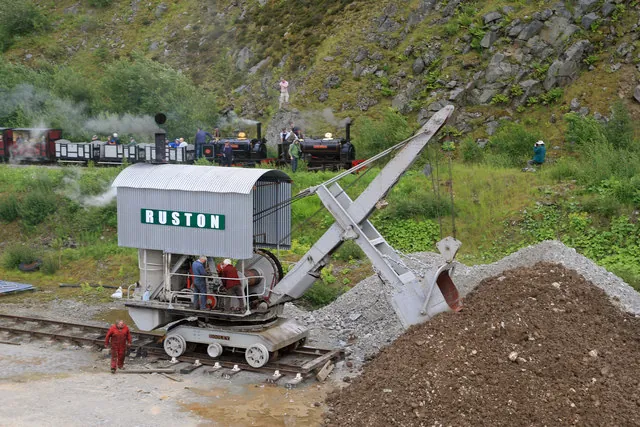
Threlkeld Quarry and Mining Museum occupies the site of the old Threlkeld granite quarry, five kilometres east of Keswick under Blencathra, and it is run almost entirely by volunteers.
That fact shapes everything about it. It is relaxed, hands-on, and completely un-museum-like — a working site with things in it rather than a gallery with labels — and the people showing you round are the people who restored the machines.
The Lake District mining collection — the museum holds the most substantial collection of Lakeland mining and quarrying material anywhere: tools, lamps, wagons, plans, minerals and photographs from the lead, copper, graphite and slate workings that were the district’s real economy for four hundred years.
Earth-moving machinery — a large collection of excavators, steam navvies, face shovels and quarry plant, much of it restored to working order. On event days they run.
The narrow-gauge railway — a passenger line round part of the site, worked by small locomotives. Children ride it repeatedly.
The mine tour — a guided trip into a genuine underground working, with helmets and lamps. It runs at set times and is the highlight of a visit.
Gold panning — proper trays and gravel, and you keep what you find. It is more absorbing than it sounds and it occupies children for a long time.
Geology displays, which are unusually good, and are the reason more than one visitor has said this is the place to come if you want to understand what the Lake District actually is under the grass.
The Vintage Excavator Trust collection and a working blacksmith on some days.
Everything about the visitor reports comes back to the people. Knowledgeable, enthusiastic, happy to explain in whatever depth you want, and — a specific and repeated point — accommodating about access: visitors arriving with electric wheelchairs report being met on arrival and having ramps sorted out without fuss.
For a site that is by nature a quarry floor, that willingness makes a real difference.
Children from about five, strongly — the train, the gold panning, the machines and the mine.
Anyone with an interest in industrial history, geology or machinery, very strongly.
Anyone wanting a polished visitor attraction less so. It is a quarry with sheds on it. That is the appeal.
Admission charged, modest, with the mine tour usually extra.
Time: two to three hours, more on an event day.
Opening: seasonal, typically Easter to autumn, and not every day — check before travelling. Event and steam days are advertised and are the best days to come.
Facilities: café, shop, toilets.
Parking: free on site.
Access: the site is a quarry floor — gravel, slopes and uneven ground — but the volunteers work hard to accommodate wheelchairs. Ring ahead and they will make arrangements.
Clothing: outdoor site, and the mine is cold and wet underfoot. Sensible shoes.
Threlkeld, five kilometres east of Keswick off the A66, signposted. Buses from Keswick to Threlkeld village, with a walk up.
Castlerigg Stone Circle is between here and Keswick.
Blencathra rises directly above and is one of the great Lakeland fells.
The Keswick to Threlkeld Railway Path, reopened after flood damage, runs along the old trackbed from the town and is a superb level walk or cycle — the best way to arrive.
Yes — there is a guided tour of a genuine mine working at set times, usually charged separately.
Yes, from about five — the narrow-gauge train, gold panning and the machinery do the work.
No, it is seasonal and not open every day. Check before travelling, and look for event and steam days.
The ground is a quarry floor, but the volunteers are notably good at making arrangements. Ring ahead.
Yes — the Keswick to Threlkeld Railway Path along the old trackbed is level and excellent.